
Home Battery Backup Systems in Fresno, CA
Reliable Backup Power for Your Home
Store solar energy and keep your lights on during outages.
- Backup power during outages—day or night
- Store excess solar energy for when you need it
- Compatible with Tesla Powerwall and leading battery systems
Get a Free Quote
or call (559) 251-5592







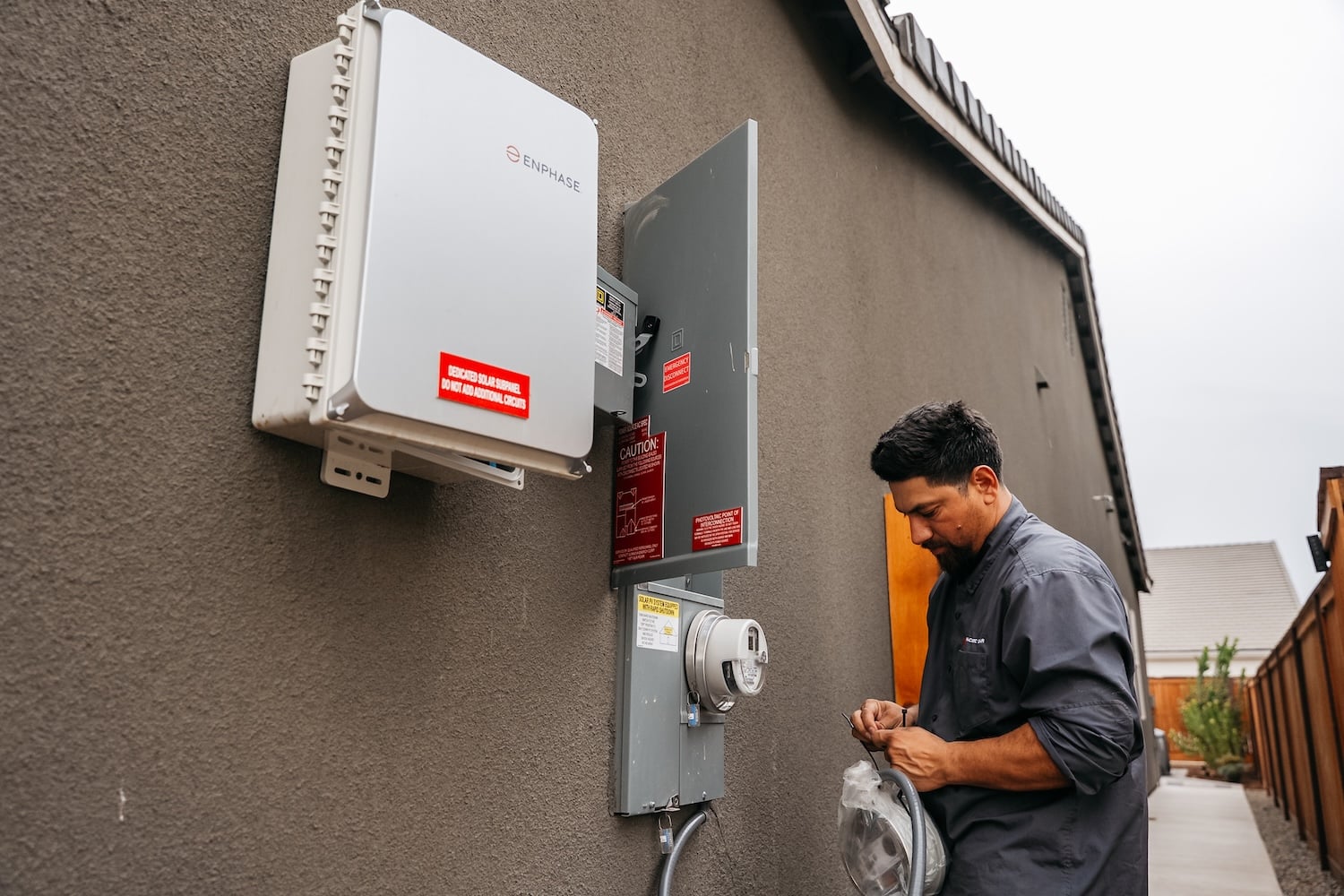
How Home Battery Backup Keeps Your Power On
A home battery backup system stores solar energy — or grid power — so that when an outage hits, your home switches to battery power automatically, often within a fraction of a second. Unlike a traditional generator, there’s no fuel to store, no manual startup, and no noise: circuits like refrigeration, medical equipment, and lighting stay on without you doing anything. We size every battery system around which circuits you actually want backed up and for how long.
Battery Backup vs. a Generator: What's the Difference?
Battery backup and generators solve the same problem differently — a battery stores power you’ve already generated (or pulled from the grid) and switches on instantly and silently with no fuel or manual startup, while a generator burns fuel on demand and can run indefinitely as long as fuel lasts. We specialize in solar-charged battery backup — install, repair, and ongoing performance monitoring — so if a generator is part of your plan, that’s a separate system outside what we install.
Benefits
Why Central Valley Homeowners Choose Our Battery Backup & Generator Solutions
Certified Experts
Each of one of our solar professionals is certified and trained to install, repair, and consult on your solar panel system.
Savings Guarantee
We promise you’ll save money by the end of the year—guaranteed. If your solar bill isn’t lower than your utility costs, we’ll cover the difference, add panels, or refund your money.
Workmanship Guarantee
When you hire our solar professionals, our work comes with a promise that we’ll cover any mistake by our team for up to 25 years.
Dedicated to Local Results
Founded in the Central Valley, our family-owned company is dedicated to helping homeowners and businesses across California take advantage of solar energy systems.
Testimonials
Trusted by your Neighbors Across Central Valley
FAQ
Battery backup and generators FAQs
What is a home solar battery backup system?
A home battery backup system stores energy — from solar panels or the grid — so your home has power ready the moment an outage hits, switching over automatically without the noise, fuel, or manual startup a generator requires. We pair battery backup with solar in most installs so the battery recharges for free during the day.
How does a home battery backup system work during a power outage?
When the grid goes down, a home battery backup system detects the outage and automatically switches your home — or the circuits you’ve chosen to back up — to stored battery power, typically within a fraction of a second, often fast enough that you won’t notice the switch. We configure which circuits get backed up based on what matters most to you.
How many batteries do I need to back up my home?
The right number depends on which circuits you want backed up and for how long — backing up just essentials (refrigerator, lights, WiFi) typically needs one battery unit, while whole-home backup for extended outages often requires two or more. We size this from your actual usage and outage priorities, not a generic one-size-fits-all number.
How long can a home battery backup power my house during an outage?
Runtime depends on battery capacity, how many circuits are backed up, and how much power those circuits draw — a single battery backing up just essentials can often run a day or more, while whole-home backup during heavy usage may last several hours to a day before needing solar recharge or grid restoration. We estimate expected runtime for your specific setup during the design process.
How much does a home battery backup system cost?
Home battery backup system costs vary by battery capacity, number of units, and whether it’s paired with new solar or added to an existing system, so there’s no single number that fits every home. We provide a detailed, itemized quote after understanding which circuits you want backed up, rather than a blanket per-battery estimate.
Can I install battery backup without solar panels?
Yes — a home battery can be installed and charged directly from the grid without solar panels, though pairing it with solar means the battery recharges for free using sunlight instead of grid power. We install battery-only backup systems for homeowners who aren’t ready for solar but still want outage protection.
Are home solar batteries safe?
Yes — home batteries sold today, including the lithium-based systems we install, go through extensive safety testing and include built-in protections against overheating and overcharging, plus code-required placement and ventilation. We install every battery system to current fire and electrical code requirements, not just manufacturer minimums.
Is home battery backup worth it?
For homeowners who experience regular outages, run essential medical or refrigeration equipment, or simply want to avoid losing power during Central Valley heat waves, battery backup typically pays off in peace of mind before you even count potential utility savings from pairing it with solar. We walk through your specific outage history and needs before recommending a system size.
Does adding battery backup increase my home's value?
Research generally shows solar paired with battery storage can increase resale value, since buyers see both lower future utility costs and built-in outage protection. The exact impact varies by market and whether the system is owned outright versus leased. We can walk you through how ownership structure affects this for your specific situation.
What's the difference between a battery backup system and a home generator?
A battery backup system stores power — often recharged by solar — and switches on instantly and silently with no fuel required, while a generator burns fuel on demand and can run for as long as fuel lasts, making it better suited to extended, multi-day outages. We specialize in solar-charged battery backup, from installation through ongoing performance monitoring and maintenance; a generator is a separate system we don’t install.
What size battery system do I need for my home?
Sizing depends on which circuits you want backed up, your typical daily usage, and how long you want to run on battery alone — we calculate this from your actual electric bills and priorities rather than your home’s square footage. Most homes land on a single battery unit for essentials or two-plus units for broader whole-home backup.
Which home battery backup brand is best?
We install several well-regarded battery brands, including Tesla Powerwall, and the right choice depends on your budget, desired capacity, and whether you’re pairing it with new or existing solar. We recommend a specific brand and model after assessing your home’s electrical setup and backup goals, not a single “best” battery for every project.
Does battery storage qualify for the federal solar tax credit?
In many cases, yes — battery storage installed alongside or connected to a solar system can qualify for the same federal tax credit as the solar panels themselves, though eligibility rules can be specific to how the battery is installed and charged. We walk every homeowner through what currently applies to their exact project before they sign, rather than assuming credit eligibility.
Do I still need a generator if I have solar battery backup?
For most homeowners, no — battery backup covers everyday, shorter outages well, especially when paired with solar for recharging, and doesn’t need fuel or manual startup. A generator can make sense for frequent, extended multi-day outages or very high power draws, but that’s a separate system outside what we install; we focus on sizing battery backup to cover as much of your actual outage risk as possible.
What maintenance does a home battery backup system need?
Home battery backup systems need very little maintenance — most are sealed units with no moving parts, so an occasional visual check and confirming the system’s software stays updated (often automatic) is usually enough. We recommend an annual check-in, especially before wildfire or heat-wave season when outages are more likely in the Central Valley.


