Commercial Solar Systems in Fresno, CA

Put your property to work against energy costs.

Pacific Solar designs and installs commercial solar systems that help Central Valley businesses cut energy costs. Our certified, in-house team handles everything from design and permitting to installation, interconnection, and Permission to Operate (PTO), with more than 40 years of experience behind every project.
Request a Commercial Solar Assessment

or call (559) 251-5592

Recent Fresno Commercial Solar Projects

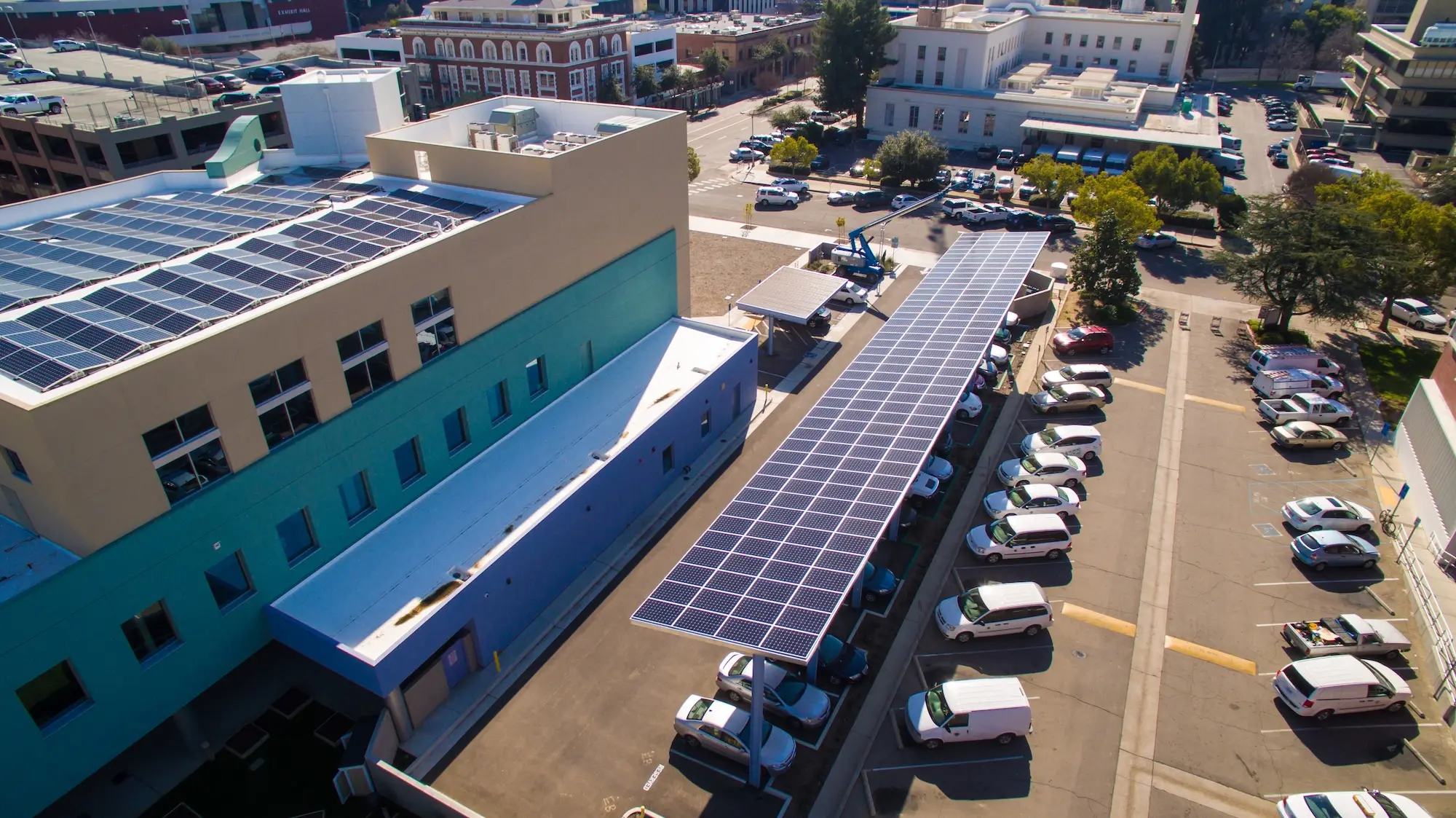
  • 212 kW solar carport and rooftop system at The Lighthouse in downtown Fresno

    212 kW | Fresno, CA

    First 5 California, The Lighthouse

    This 212 kW commercial solar system combines a long solar carport with rooftop panels on The Lighthouse building in downtown Fresno. The carport shades a full row of parked vehicles while generating power. The rooftop arrays add production without using any additional ground space. For an urban site with limited room, this layout gets the most out of both the parking area and the roof.

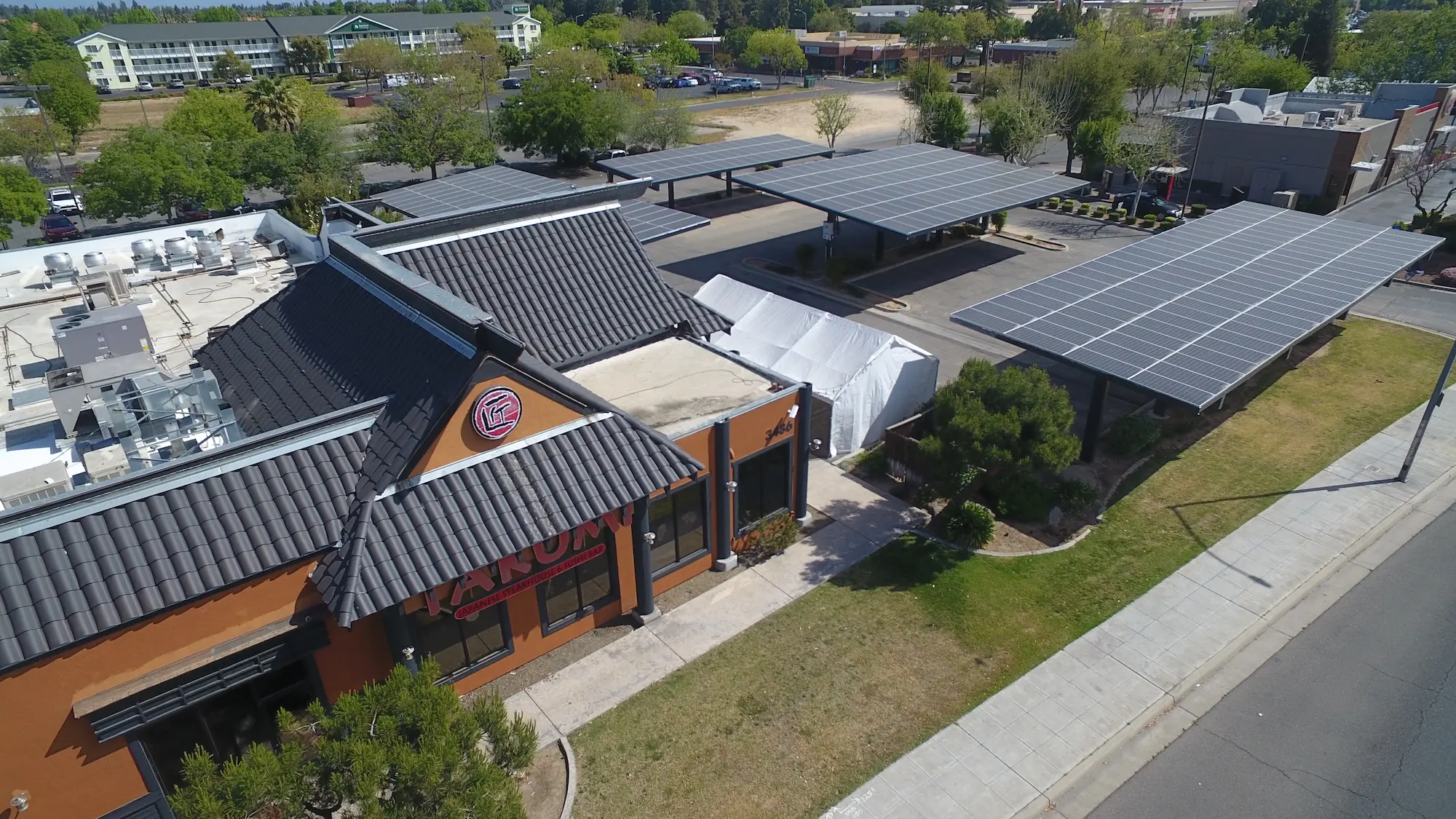
  • 148 kW solar carport canopies over the Takumi Restaurant parking lot in Fresno

    148 kW | Fresno, CA

    Takumi Restaurant

    This 148 kW commercial solar system turns the Takumi Restaurant parking lot into a power source. Several solar carport canopies cover the lot beside the building and leave the restaurant's tile roofline untouched. Customers get shaded parking, and the restaurant offsets the high energy costs of running a commercial kitchen. It shows how a commercial solar system can fit a hospitality business without changing the look of the property.

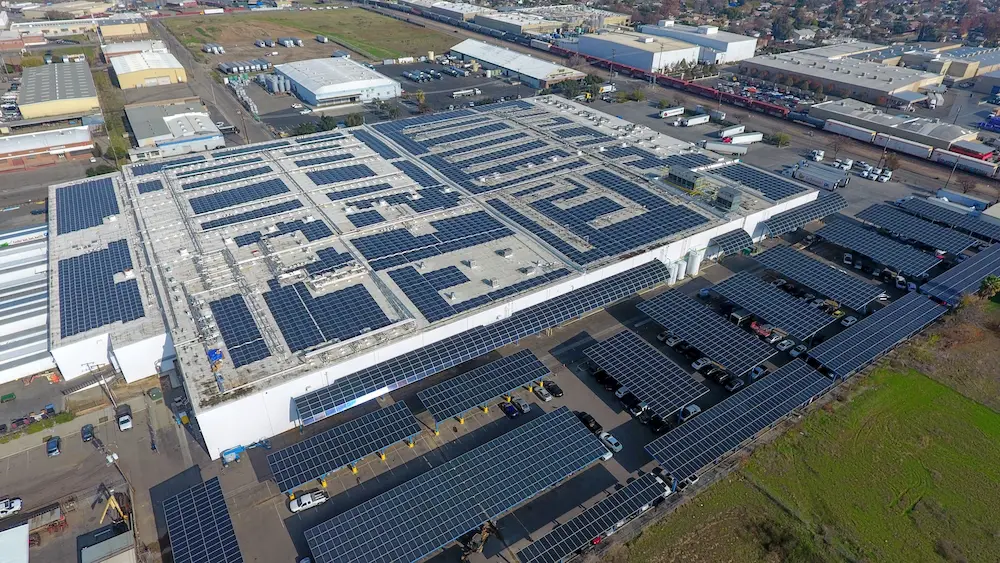
  • 6.5 MW rooftop and carport solar system at the Ok Produce facility in Fresno

    6.5 MW | Fresno, CA

    Ok Produce

    This 6.5 MW commercial solar system is one of the largest in our portfolio. Thousands of panels cover the facility's expansive flat roof, and solar carports shade the employee and truck parking areas. Food processing and cold storage run around the clock, so the system is built to offset a major share of the facility's heavy electricity demand. It is a strong example of what a commercial solar system can do for agricultural and industrial operations in the Central Valley.

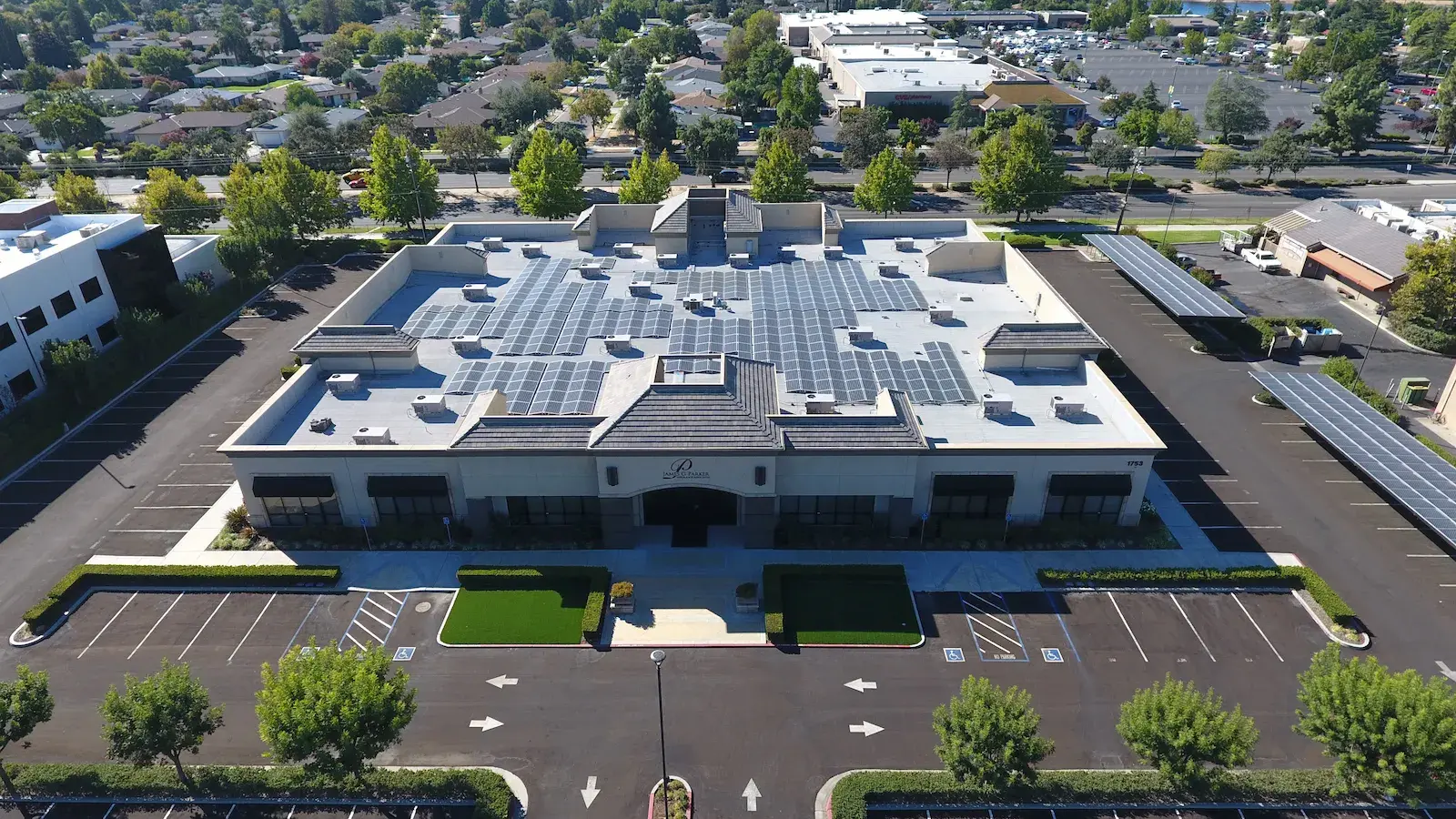
  • 262 kW rooftop solar system on the Parker Insurance office building in Fresno

    262 kW | Fresno, CA

    Parker Insurance

    This 262 kW commercial solar system sits on the flat roof of the Parker Insurance office building. The panels are arranged in tidy rows around the rooftop HVAC units and architectural features. Because the arrays are on the roof, the front entrance and parking lot look the same as before. The system gives the business steady savings on daytime electricity, when the office uses the most power.

  • 251 kW rooftop and carport solar system at Belmont Country Club in Fresno

    251 kW | Fresno, CA

    Belmont Country Club

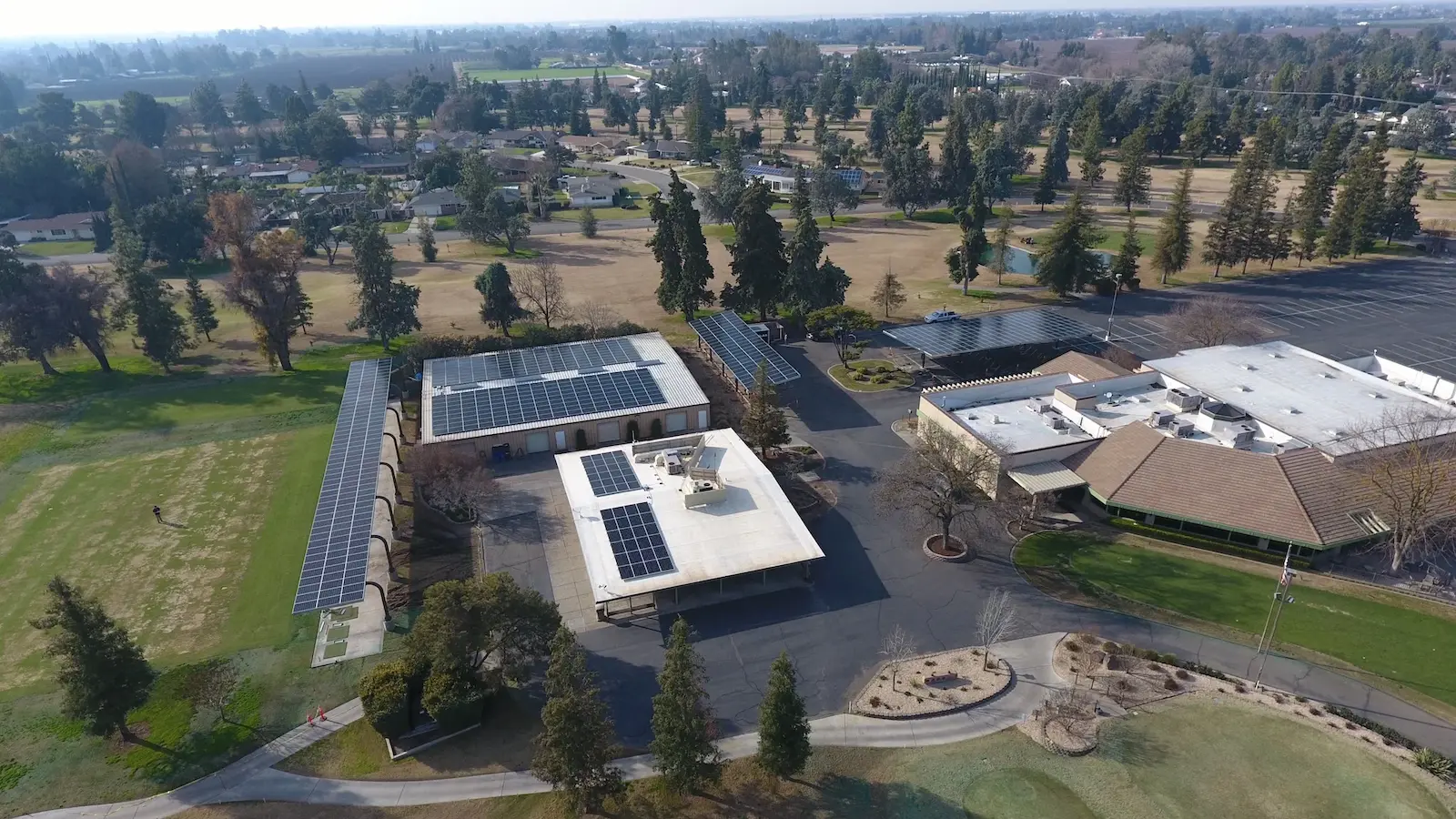
    This 251 kW commercial solar system spreads across several buildings and parking areas at Belmont Country Club. Rooftop arrays cover the clubhouse-area buildings, and solar carports line the edges of the lot. The mix of roof and carport installations suits a property with many structures and plenty of open pavement. The panels fit in with the golf course setting and offset the club's year-round energy use.

Solar Solutions for Your Industry

Every business has different energy demands, operating schedules, and facility requirements. Pacific Solar designs commercial solar solutions around the way your property actually operates. Explore our industry-specific solar solutions to see how we can help your business reduce energy costs, improve resilience, and make better use of your property.

Testimonials

Trusted by your Neighbors Across Central Valley

Our Guarantee To You

If we get it wrong, we make it right. We'll run a full system diagnostic at no cost, add to the system at our expense if needed, and if we still can't get you to our estimated savings potential for your panel system, we'll remove it and refund you.

FAQ

Have Any Questions?

Commercial solar is a solar energy system built to lower a business’s electricity costs. Unlike a home system, it is designed around how your business runs, so no two look alike. We customize every quote to your needs, whether that means rooftop panels, a ground mount, solar carports, or EV charging stations, so you never pay for more than you need.
Solar panels absorb sunlight and produce direct current (DC) electricity. Inverters convert it into alternating current (AC), the type of power your building uses. During sun hours, your system powers your building first, and any excess goes to the utility grid for a credit at a rate set by your utility. After sundown, your building draws from the grid.
We size your system from your actual electricity usage and the rate schedule you are enrolled in with your utility, not your square footage. Two 5,800-square-foot buildings can have very different needs. An office open weekdays from 7 AM to 5 PM uses power differently than a brewery that runs cold storage and opens evenings and weekends.
There is no fixed number, because system size follows your electricity usage, not your building size. Our commercial projects have ranged from a 75.84 kW carport system for a drive-in restaurant to a 4.39 MW system for a produce distribution facility. We calculate your panel count from your usage and available space.
Cost depends on the size of the system you need to offset your building’s electricity usage. Solar is not just another bill, because it reduces what you pay your utility. Your solar payment is a fixed monthly cost, not a variable one, and it is often lower than the utility bill it replaces. We provide a customized quote based on your actual usage.
Yes, but the window is closing. The federal Investment Tax Credit (ITC) lets a business claim up to 30% of its solar system cost as a credit against federal taxes. Under current law, a system that did not begin construction by July 4, 2026 must be placed in service by December 31, 2027 to qualify. Commercial systems may also qualify for 100% bonus depreciation.
Yes. We help you choose the type of financing that gives your business the greatest return and lowers your overhead. When a family-owned grocery store needed specialized financing to reach its energy goals, we researched and found a financing partner that fit. That 135.72 kW system now saves the store $38,153 a year.
Production depends on system size and site conditions. Among our completed projects, a 75.84 kW system produces 119,944 kWh a year, a 135.72 kW system produces 202,281 kWh, and an 817.8 kW system produces 1,190,011 kWh. That works out to roughly 1,400 to 1,600 kWh a year for every kW installed.
Most commercial-grade panels available today run in the high-teens to low-20% efficiency range, meaning they convert that share of sunlight into usable electricity. Efficiency is only one factor in system performance, though. Panel placement, shading, and system design affect real-world output as much as the panel spec sheet does.
For many businesses, yes. Our completed commercial projects have paid for themselves in three to five years. A drive-in restaurant saves $21,850 a year with a four-year payback, and a grocery market saves $123,887 a year with a five-year payback. We run the numbers on your actual usage before recommending a system.
In many cases, yes. A properly sized system paired with available roof or ground space can offset all or nearly all of a building’s electricity usage. Larger, energy-intensive operations (cold storage, manufacturing) may only be able to offset a portion on-site, depending on available space relative to usage. We assess this specifically for each building rather than assuming full offset is always possible.
The best panel type depends on your roof space, budget, and efficiency needs. Monocrystalline panels offer the highest efficiency for space-constrained roofs, while polycrystalline can be a lower-cost option where space isn’t limited. We recommend a specific panel type after assessing your building’s roof conditions and energy goals, not a single “best” panel for every project.
Look for a licensed, locally experienced installer (verify their CSLB license), manufacturer certifications, a portfolio of completed commercial projects, not just residential ones, and a clear process for permitting, interconnection, and post-install support. Commercial installs involve different code requirements and utility coordination than residential ones, so installer experience with commercial-specific work matters.
Most commercial roof types can support solar, including flat, low-slope, and metal roofs, though roof age, structural load capacity, and remaining roof life all factor into whether installation makes sense now versus after a roof replacement. We assess roof condition as part of every commercial site visit before recommending a system.
A commercial solar system connects through an inverter to your building’s main electrical panel or switchgear, coordinated with your utility for interconnection approval before the system can operate. This process typically involves more coordination than a residential interconnection due to higher system capacity and commercial utility requirements.

Request a Commercial Solar Assessment

We’re ready to answer your questions and guide you on your solar energy journey.